Sunday, April 9, 2017

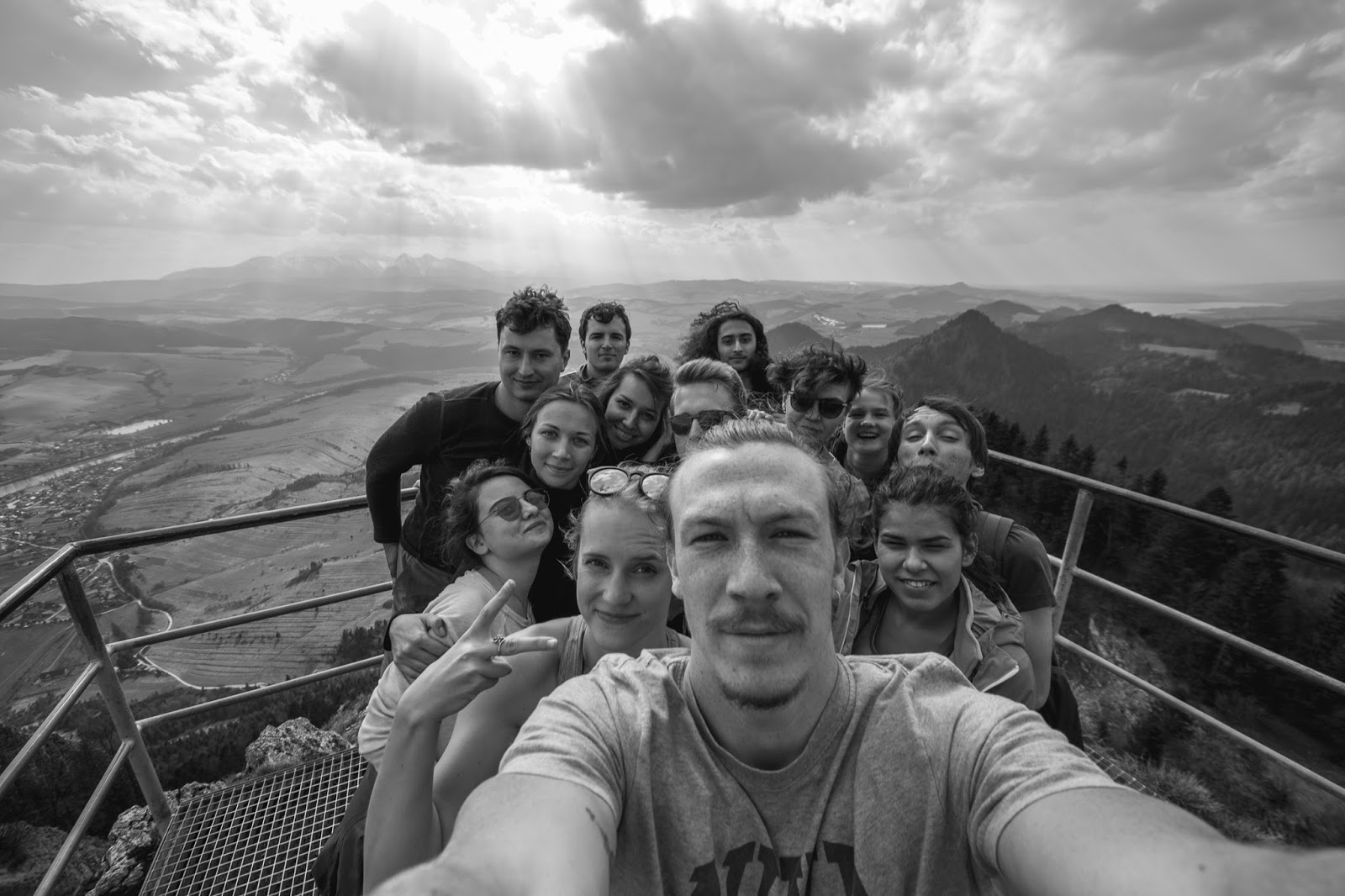
Rural Areas for You(th), You(th) for Rural Areas - INTERVIEW WITH ERIK, MARIA, AGNES AND KRISTINA


Name of the project: Rural Areas for You(th), You(th) for Rural Areas
Date: 23rd – 31st March , 2017
Country/City: Slovakia, Červeny Klástor


What was the main topic of the event?
Erik Allik: Rural development and photography
Agnes Aus: The main topic of the YE was to analyze the situation in the rural areas of participating countries, find problems and what could be done to improve life in the rural areas. In addition to that we learned to use photography and videos to promote the area where the project took place.
Maria Vita: The main topic was development of rural areas through promotion and tourism and photography. We discussed the problems rural areas have in our countries and in that specific area where we stayed in Slovakia. The other main topic was photography, so we had some lectures about photography and we made photo and video material for the Pieniny National Park - the place we were staying.
Kristina Korell: This exchange was about promoting rural areas in Slovakia and finding out ways to develop tourism and business in those areas.

What was the biggest learning moments on the event for you?
Erik Allik: That a lot of young people think the same as I do about rural development, but also that many do not think like that at all, which is both encouraging, as well as challenging, at the same time.
Agnes Aus: Because I was already rather familiar with the topic I believe I gained soft skills the most - learning to work as a team, to divide roles, find strengths of others and communicate my ideas in a multicultural environment.
Maria Vita:For me the biggest learning moment was actually practising my English and getting overall knowledge of the other participating countries - their culture, people, problems… And i also got some new photography tips :)
Kristina Korell: The biggest learning moment was how important is workload distribution in team work and how to work with different people.

Do you have any plans to continue active in the field? If yes, what?
Erik Allik: Not specific plans, but I might join other projects on that topic, if possible, and I also have some commercial entrepreneurship ideas regarding rural development and economics.
Agnes Aus: As I recently started working more with young people I would like to do perhaps some learning mobilities to gain more knowledge about teaching and communication. I would certainly join another youth exchange on an interesting topic and I'm looking into the possibility to do Erasmus Young Entrepreneur.
Maria Vita: We were told about the endless possibilities Erasmus + has, so i am thinking of maybe participating in some other projects too, the Erasmus for young entrepreneurs for example.

Kristina Korell: I'm planning to continue participating in similar projects and maybe organizing a project like that myself.

Would you recommend it to your friends? I yes, why? If not, why not?
Erik Allik: Yes, I think participating in such project would be beneficial and eye opening to many young people.
Agnes Aus: I would definitely recommend it to my friends because YE is a great way to gain new skills that can be applied elsewhere in life. It will give you lots of new contacts and help you see different perspectives. Last but not least, it's possibly the most fun you can have in a week.
Maria Vita: I would definitely recommend. You get new cool friends, see amazing places, get to discuss on topics that matter and make plans to make the world a better place :)

Kristina Korell: I definitely will recommend it to my friends, because besides gaining a lot of new knowledge there will be a lot of fun activities and new friends from different countries, and who doesen't want that?

More comments or anything else you would like to share? You can add here in your own language, if you want!
Erik Allik: It was interesting to see that rural problems vary significantly from country to country, and that perhaps people from one country could offer quite original solutions to problems in a completely different country.
Maria Vita: It’s just something you can’t get while travelling on your own. 35 people in the same house for a whole week. They kind of become your sort of family for that time, and you forget the other life you have in your country. A great way for forgetting everyday problems and taking break to think of what really matters in life.

Our group was composed by: Erik Allik, Agnes Aus, Maria Vita, Kristina Korell and Eduard Porotnikov. 


This Project was financed by European Commission's Erasmus + Programme

Friday, March 17, 2017

Active participation as a tool for Democracy Youth Exchange - INTERVIEW WITH STELLA, MARTIN AND SOPHIA

Name of the project: Active participation as a tool for Democracy
Date: 19.02.2017 - 28.02.2017
Country/City: Diemerigen, France


What was the main topic of the event?


Stella Raudsepp - The project comprehended a variety of topics related to democracy and human rights. The main focus was on thought provoking discussions to raise awareness about different aspects of democracy and how to improve oneself and society through active participation in one’s community.
Sophia Strömberg - Democracy and human rights
Martin Kolberg - The main topic was the emphasis placed on the importance of peoples´s right and duty to participate in their society´s functioning and the encouragement of youth´s role in the democratic decision making processes. We discussed how it is up for the people themselves to create and be responsible for the conditions they live in – as the saying goes “be the change you wish to see in the world”.


What was the biggest learning moments on the event for you?

Stella Raudsepp - Every day of the project offered an opportunity for self-growth. All of the activities required teamwork, active participation and creativity, which meant that we got to learn a lot from each other. Throughout the project we got to hear, discuss and analyze the pros and cons of democracy and the application of human rights in participating countries. I gained a lot of valuable eye-opening knowledge. As a result, I am able to understand and appreciate every nation on a deeper level than before.
For every workshop team was formed randomly, which gave an opportunity to cooperate with and learn from different people every time. No matter what the difficulty might have been, together we managed to succeed. For example, some of the participants had a hard time expressing themselves in English, or had an absolutely contradictory view on some things, but those were the precious moments that made us all evolve. So I would say that the project as a whole was a big learning experience – accepting, respecting and learning from diversity.
Sophia Strömberg - When I got to know about and compare how democracy operates in different countries, a lot of culturally-shocking moments about Turkey, when I heard what young people dislike about politics and life in their countries
Martin Kolberg - The project gave me a better understanding of the privileges and human rights that I have in my home country and which we often take for granted. I learned to appreciate the possibility of expressing my views and emotions through free speech without the fear of repercussions or censorship. The project also made me contemplate on questions such as “Would I fight for my country in a war?” and “Should borders exist?” and I took great pride in presenting my country and its innovative solutions to participants from other countries.


Do you have any plans to continue active in the field? If yes, what?

Stella Raudsepp - I would love to continue participating in different kinds of projects and also host one by myself one day!
Sophia Strömberg - I would like to engage in helping to organize some events and projects as much as I can now to be able to cooperate with the organization more in the future (in writing my own project, for example)
Martin Kolberg - I will do my best to take part in another project because the first hand learning experience in an international collective equips the participant with new insight and viewpoints which is very influential in a future perspective for a young person like me. Learning from a textbook is very different than learning from new friends throughout different techniques of non-formal education because the workshops and activities really make one go through self-reflection and improve the skills of analytical thinking.


Would you recommend it to your friends? If yes, why? If not, why not?

Stella Raudsepp - Absolutely! There’s no better way to learn a lot about yourself, other countries, cultures and interesting topics in such a short period of time! Lifelong memories, burst of motivation and new friends guaranteed!
Sophia Strömberg - I have already recommended. J Because I think participating in youth exchanges is one of the most vital things for young people, and by engaging in such big an amount of projects the organization gifts a lot of opportunities to travel and widen the knowledge in different areas, on different topics and with new people
Martin Kolberg - I have shared information about different projects to my friends already and continue to do so in the future. I think every young person should take part in similar international youth projects or volunteering to gain knowledge about different perspectives of life that come from different cultures. These projects give us a chance to take a look and introduce ourselves into other peoples´s cultures in a very good and friendly atmosphere. The experience one gets can be very influential in future decision making and the general shaping of youth´s views towards different topics.


More comments or anything else you would like to share? You can add here in your own language, if you want!

Stella Raudsepp - To have a great experience it is important to be flexible, open-minded and positive!
Sophia Strömberg - Just another expression of gratitude for choosing me as a participant and of hope for further cooperation J
Martin Kolberg - I would like to thank the organizers and facilitators for the chance to partake in this wonderful project. I found many new friends from all different walks of life, had fun and broadened my eyesight regarding human rights, citizenship and the importance of every individual´s role in building the society they live in. I would also like to mention the accommodation and facilities we used really exceeded my expectations and the whole thing was a very positive experience!


The complete group was formed by Marco Santos, Stella Raudsepp, Kristi Aksiim, Grete Post, Martin Kolberg and Sophia Strömberg.


This Project was financed by European Commission's Erasmus + Programme

Sunday, March 5, 2017

Diversity in Europe: Richness or? Training Course - INTERVIEW WITH KAIA LAANSOO, ASKO TAMM AND RYNALDO PUUSEP


Name of the project: “Diversity in Europe: Richness or?"
Date: 10th until 17th February 2017
Country/City: Elazig, Turkey


What was the main topic of the event?

Rynaldo: Cultural diversity in Europe. Discrimination based on the stereotypes and prejudices.
Discrimination occurs when people are treated less favorably than other people are in a comparable situation only because they belong, or are perceived to belong to a certain group or category of people. People may be discriminated against because of their age, disability, ethnicity, origin, political belief, race, religion, sex or gender, sexual orientation, language, culture and on many other grounds. Discrimination, which is often the result of prejudices people hold, makes people powerless, impedes them from becoming active citizens, restricts them from developing their skills and, in many situations, from accessing work, health services, education or accommodation
Training course helped youth workers understand the obstacles which might steer towards our society and how to prevent those aforementioned problems efficiently in the future.
Kaia: Diversity and different nations living together, migration and the results of it in different countries.
Asko: The main topic of the event was, as the name suggests, diversity. We discussed many different subtopics, including diversity’s effect on society and culture, problems introduced by the rise in diversity, conflict resolution etc. Examples ranged from Turkish food’s effect on the eating habits of Germans to the integration of the Roma to the society of Romania and other countries. Apart from the bigger issues that were originally planned to be discussed, participants brought out many personal experiences, which enriched the debate.
While the topic of the event was the question of diversity, the event itself also showed a great deal of diversity, as the participants from different countries represented their own culture and thus provided a chance to come into contact with a lot of variety.

What was the biggest learning moments on the event for you?

Rynaldo: Most of the learning was informal. Building social capital, creating new connections, developing relationships with other international organisations & meeting a lot of new people who have common interests. At first I was terrified of the language barrier but it was rather easy to overcome within the first few days. Despite I have frequently participated in training courses for youth workers, it was my first time to participate in an international project so I didn’t know what to expect.  There were participants whose English vocabulary and fluency weren’t the best but there were others very helpful. Yet though, all this nonverbal conversation added even more to the glance. It was an enjoyable experiences because everyone who were there - they volunteered and wanted to be in the training course. We learnt from each other and speaking directly with a person from a differenct cultural prisma gave us insights we would have never encountered otherwise. For an example, the Romanians spoke about their winter revolution, the Hungarians told us of their immigration policy and the Turkish people told how they feel about Erdogan and how the coup which happened recently was actually conducted. The most we learnt that people are different & they change ever more when they are brought out from their comfort-zone. They have different behaviours, worldviews, mindset and charisma. If the awareness of the aspects aformentioned is low then it might strive to serious intercultural problems. If the people are aware of the issues then they can manage the situation well and that would bring many benefits to the entire society!
Kaia: The biggest learning moments were the discussions and group works. Those activities gave quite a lot to think about and made us realise that people in different countries (with different backgrounds) actually see the world pretty differently. Socialising was another big part of the event and it actually was fun, however, it was one of the biggest learning moments as well.
Asko: While the non-formal learning part was, thanks to the experts, highly educational, the informal learning part was even more beneficial in every way: although focusing on learning allowed knowledge to be obtained quickly, actually spending time with people from other cultures is unbelievably rewarding, when it comes to education. Because of that, the parts where I learned the most during the programme, were not the workshops, rather than the parts where participants could spend their free time together. Hearing stories from people with a variety of different backgrounds gives a whole different point of view to all issues.

Do you have any plans to continue active in the field? If yes, what?

Rynaldo: I really do! There are approximately 175 million people who are living outside of their country of origin. Europe accomodates 88 another ethnicities under its roof. Conclusion is that most of the countries have gigantic struggles to deal with the concern – we need to increase people’s awareness which will lead to bigger acceptance and that will reduce discrimination and prejudication. Field is important and the field needs coverage.
Kaia: Yes, I enjoyed every day and every lecture that was given. I am sure that I will continue activities in the field.
Asko: I would be more than happy to put the newly obtained knowledge to good use. One of the ways I see myself likely doing so is taking part of an EVS programme. Apart from that, the knowledge can also be put to use when it comes to local issues.

Would you recommend it to your friends? I yes, why? If not, why not?

Rynaldo: Training course lead several participants to existential crisis in a good way. We had a participant who was called Matej. He had spectacular knowledge in several fields. He has been in over 50 Erasmus+ projects, visited more than 40 countries and the experiences he acquires, he shares his knowledge in a local university. There was another participant called Cove – he made everything that was in his power to make people happy even if his prosperity was somehow deteriorated. The organizers were spectacular as well – I have never seen how someone can manage 25 adults to jump, crawl and run before their first coffee in the morning so these adults actually have fun and they want to do that. The project showed many of us that you can live your life differently – there are a lot to explore in the world and with those experiences it is possible to create awareness among the society, share your knowledge and meanwhile doing that also bring happiness with you. I will definitely recommend NÜH and Erasmus+ projects to my friends because it brings people out of their comfort-zone and that is the point when the journey of learning begins!
I really do recommend attending Erasmus+ projects!
Kaia: I would recommend the program to everyone who would like to broaden his/her mind. The activity is really educating and it is a good way to get non-formal education which is a fun way of learning and getting new acquaintances from different countries.
Asko: I definitely recommend taking part of this kind of programmes to everyone who is is interested, for many reasons.
First of all, you can learn so much in ways that you could never imagine. Forget everything you know about sitting in a classroom and experience learning in awesome workshops and while having free time as well. You learn from the people and are likely to teach as well, intended or not.
Secondly, you obtain a lot of new friends from other countries. The week with them went past so quickly and although one could think that so little amount of time is not enough to actually bond with people, you will miss them once you get home
Thirdly, you see the country. Every destination is a little bit different and events like this one provide a chance to see the local culture, people, and sights.
Taking part of events like this one is a must to anyone who is interested.

More comments or anything else you would like to share? You can add here in your own language, if you want!
Rynaldo: It was a wonderful experience and I am going to recommend others the same. All the participants were full of joy, the organisers were stunningly helpful with even the dumbest concerns, the locals were kind and warm and if you are considering in participating – do it! Language barrier won’t become a problem, nobody will be left out and the organisers have put years of effort to hold the event so there shouldn’t be any hesitations!
Kaia: I would like to say that the experience was fun which included quite many learning activities. The mixture of fun and learning made the course really enjoyable training with a really relaxed atmosphere. The training itself was a great experience and gave many different aspects of the topic. The lecturers were aware of the topic and gave interesting assignments which raised many questions and gave good basis for argumentation.
Asko: It was honestly amazing and now that it has ended, I actually feel a little sad. I loved every part of it: the planned workshops, the people, the culture, the city, the free time activities, everything. I feel as if I definitely need another one of these events. I can’t even express how good it feels.


This Project was financed by European Commission's Erasmus + Programme

Saturday, February 25, 2017

YAGO Youth Activism Generates Opportunity Youth Exchange - INTERVIEW WITH THE GROUP


Name of the project: YAGO - Youth Activism Generates Opportunity
Date: 10th Jan-18th Jan 2017
Country/City: Greece, Thessaloniki


What was the main topic of the event?

Jane Meriloo: Youth Activism. How to be a youth activist, how to stand for Your rights and what kind of opportunities are there in that field.

Ethel Ütsmüts: The main topic was youth activism, social activism and volunteerism.Pavel Belõhh: Human Rights

Merilin Jõesaar: Youth activism

What was the biggest learning moments on the event for you?

Jane Meriloo: That together You can make a big impact in other people lives. You have several ways how to stand for Your rights and You can use them all (social media, social experiment etc). I got to be a part of a social experiment and because of that I got to see for the first time ever through my own experience what it's like to be an activist. It felt great.

Pavel Belõhh: I understood on the project, the power of company. When you are alone you will make less, than if you are with a big company. Every game we were playing in project was in company, and we made a lot of useful things.

Ethel Ütsmüts: The other people really inspired me. There were a lot of people who had taken part in all kinds of different projects and to see so many young people already with such experiences, I really admired that.

Merilin Jõesaar: We gained more knowledge about the human rights, which was a topic I'd oddly never had had discussions about.
                  Do you have any plans to continue active in the field? If yes, what?

Jane Meriloo: Yes, now I know that we (youth) have the power to make a change and it doesn't take a lot to make an impact on the society. So I can do it myself if I feel like have to.

Pavel Belõhh: Yes, I want to participate in another youth exchange projects, and be an EVS volunteer in short programs.

Ethel Ütsmüts: I would partake in volunteering programmes or find another projects work/study abroad for an amount of time.

Merilin Jõesaar: I have some plans for the future, but if I say them out loud they might not truly happen ;)Would you recommend it to your friends? I yes, why? If not, why not?

Jane Meriloo: Yes, it was a well organized project, great people, and I got some new knowledge, too.

Pavel Belõhh: Yes I already recommended to my friends. Because it is very interesting moment in life, in one week you may get so much feelings, which you won’t get in years of routine life.

Ethel Ütsmüts: I would recommend youth programmes to my friends - the experience never goes to waste. There are so many interesting people in the world to meet, who will influence and inspire in so many ways and the topics in youth programmes are there for a reason - they matter and the world needs active young people to take any kind of action in terms of a better place for us to live in.

Merilin Jõesaar: For sure! It is always great to gain more experience and look outside of your own small little world :)

More comments or anything else you would like to share? You can add here in your own language, if you want!

Pavel Belõhh: Всё было замечательно, организация на высшем уровне, я рад что молодёжь имеет такую возможность, участвовать в такого рода проектах.


Ethel Ütsmüts: What I learned the most is not actually anything that has to do with the topic of the programme. It was actually working together with others, people from other nations and cultures. Living in Estonia and being surrounded by different Estonians is much more different than being surrounded by different cultures The difference is really there and I loved to listen to others sharing their opinions about the world and more.
Merilin Jõesaar: Take part of these projects and be happy and active in general :))
This Project was financed by European Commission's Erasmus + Programme

Wednesday, February 22, 2017

Game 4 Us Training Course - INTERVIEW WITH PRIIT AMER AND RAIDO VÄINSAR


 Name of the project: Games 4 US
Date: 07th – 15th February 2017
Country/City: Turkey/Usak


What was the main topic of the event?

Priit Amer - The main topic was games – theory of games, variety of games and game styles, what is gamification and what does it take to create games.

Raido Väinsar - The main topic of the event was how games are developed, how to make life fun through gamification and how gamification can be implemented into teaching and learning.

What was the biggest learning moments on the event for you?

Priit Amer - The biggest learning moment without any doubt was definitely when we created our own games within groups and the next day went to test ‘em with students in the local highschool. It of course was a challenge for our games and showed us what to change for improvement, but most of all gave us a rear opportunity to see the school-life in Turkey and to talk with local youngsters  - something I’ll remember for a long time.

Raido Väinsar - The biggest learning moment for me was that it takes a lot of research and testing to develop a game that will appeal both to the creators and for the target groups. Because what might seem like a great idea for the game-maker might not have the same effect on the player. So you need a lot of trial and error to make progress. Also that gamifying is a great way to get people to actively participate in everyday, otherwise inconvenient, unexciting or repetitive activities.

Do you have any plans to continue active in the field? If yes, what?

Priit Amer - Yes of course I plan to continue attending on those kind of activities, since they’ve gave me so much and taught me priceless life lessons that formal education just can’t give you, where as in non-formal education only the sky seems to be the limit.

Raido Väinsar - I will surely continue to be active in the field. These kinds of non-formal learning activities are hugely rewarding, insightful and very educational. Not only do you learn specific topics, you also experience first-hand how they work and what’s it like to collaborate with people from completely different backgrounds for a common cause. Making this a very personal and precious memory.

Would you recommend it to your friends? If yes, why? If not, why not?

Priit Amer - For sure I’d recommend it to my friends, in fact I attended this activity with my friend and I know he liked it a lot. I think the biggest benefit of those sort of activities is the concept of non-formal education, which just changes your world regarding education as such, since it is the quite opposite of school based learning and it is done in a playful, fun and enjoyable way, but at the same time you do learn a lot.

Raido Väinsar - I will definitely recommend it to my friends. Everyone should have the chance to take a journey to get educated and to broaden one’s mind but most of all because it’s fun and an experience of a lifetime.

More comments or anything else you would like to share? You can add here in your own language, if you want!

Priit Amer - Though the survival mode was on from the beginning already, due to some unexpected difficulties, it turned out to be one of the best projects I’ve been in. Many thanks to the organizers who we’re very helpful, competent and managed to create very nice atmosphere, but most of all to the other participants without whom it wouldn’t’ve been possible. And also many thanks to Noored Ühiskonna Heaks, who made our journey there possible and supported us a lot before the project.

Raido Väinsar - Thank you Noored Ühiskonna Heaks for the support and giving me the opportunity to go on this unforgettable journey! Thank you organisers of Games 4 US! for all that you taught us, your guidance, you kind help and your unbelievable hospitality! And last but definitely not least, Thank you all the lovely people I had the chance to meet on the way. Without you this trip wouldn’t have been nearly as magical. But as you all said - This is just the beginning.


This Project was financed by European Commission's Erasmus + Programme

Monday, February 13, 2017

Eco Building for Future Training Course - INTERVIEW WITH HANNA REILSON AND KRISTIIN SULG

Name of the project: Eco Building for Future
Date: 17th to 23rd January 2017
Country/City: Spain/ Málaga


What was the main topic of the event?

Hanna Reilson - Eco
‐building and environmental awareness. During the week we discussed and developed our knowledge about the topic. Also we had a practical goal – to build a prototype of a dry eco‐toilet, which will use the capacity of compost to create organic fertilizer. Also we used recycled materials. It was funny to think that young people from different countries are coming together to build an eco-toilet. Later I had to admit that it was great way to promote teamwork and to bring the whole group together.

Kristiin Sulg - The main topic of the event was to get a real experience of building a prototype of a dry eco-toilet. Even though, the majority of our time was spent to actually build it, we had an opportunity to study some new theoretical knowledge of ecobuildings. 
The idea of this training was also to let young people to be creative and to learn new building techniques that might be useful in the future.

What was the biggest learning moments on the event for you?

Hanna Reilson - Well, for me it was the very first time to build a dry eco-toilet. So the whole thing was like a big learning-process which gave me a lot of new experiences and developed my skills.

Kristiin Sulg - I found myself thinking about the importance of a team-work. I have worked in different teams before, but every new experience is useful. If there is a certain work allocation in a project, every participant has to be open-minded to every opinion and idea.
This training asserted me that every member of the team must be cooperative to feel the unity and power in a team.

Do you have any plans to continue active in the field? If yes, what?

Hanna Reilson - For sure I’m trying to live and act more ecofriendly. And who knows, maybe someday I’m really going to use my new building skills as well.

Kristiin Sulg - In truth, I am not telling you that I am going to be active in building eco-toilets. But I am very thankful because I had experience like this. This training was important to me as I understand now the importance of environment even more.
Every person in the world has a power to be more environmentally friendly. We have to start with small steps.

Would you recommend it to your friends? If yes, why? If not, why not?

Hanna Reilson - Yes, of course! It’s such a great opportunity to learn and develop yourself!

Kristiin Sulg - Yes, I will recommend it to my friends! This was my first experience in training like this as well. I am really glad I decided to participate in it, even though I was a bit afraid of it at first. But there’s nothing to worry about!
In my opinion, young people have so many opportunities to explore the world, different cultures and people. Why not to join in? Taking part in diverse projects will broaden your mind in different ways.
To sum it up, I’d like to share with you this quote: “Fill your life with adventures, not things. Have stories to tell, not stuff to show”.


More comments or anything else you would like to share? You can add here in your own language, if you want!


Kristiin Sulg - I would like to thank the organizers of this project. They worked so hard to make it happen. And our trainers were amazing. It was a wonderful time with all the organizers, trainers and our team. 


This Project was financed by European Commission's Erasmus + Programme